What Is Body Doubling, and How Do You Actually Do It?
By Aaron Wakely, Nurrow founder · July 19, 2026
You've probably noticed it without having a name for it: it's easier to answer emails when a coworker is typing away next to you, easier to study when the library is full instead of empty, easier to fold laundry while someone else is puttering around the same room. Body doubling is the deliberate version of that: you bring in another person, in the room or on a screen, specifically so their presence helps you start and stay with a task, even though they're not helping with the task itself.
This page covers what body doubling really is, the concrete ways people actually do it (including Focusmate, the coworking service built around this exact idea), and then, honestly, where a focus app's virtual pet does and doesn't fit into the picture.
What Body Doubling Actually Is
The core idea is simple: another person is present while you work, usually doing their own unrelated task, not coaching you or checking your output. Nobody is managing anybody. You might be drafting a report while your body double answers their own emails, or you might both just be doing the readings you've each been putting off. The content of the work barely matters. What matters is that you're each visible to the other for the length of the session.
That's a meaningfully different thing from a study group or a work meeting, where the goal is collaboration or discussion. In body doubling, the point is closer to a witness than a collaborator: someone whose presence quietly raises the cost of drifting off task, because you'd notice yourself doing it, and, in a small way, so would they.
Why It Seems to Work
Nobody needs a clinical explanation to notice that it helps, and it's worth being careful here: this is a practical technique people find useful, not a documented treatment for anything. In general terms, being watched or accompanied by another person tends to add a light layer of social accountability and gentle pressure to look like you're doing what you said you'd do. That small, external nudge can matter a lot for the hardest part of most tasks: the first few minutes of actually starting, and the stretch right after your initial interest wears off. A timer alone can't watch you the way a person can, even a person who isn't paying close attention.
Real Ways to Do Body Doubling
These are the actual, literal versions of the technique, the kind that involve another human being. If you're looking for something to try today, start here.
Focusmate
Focusmate is a virtual coworking platform built specifically around body doubling. You pick a time slot, and the platform matches you with another real person over video for a focused session, either 25, 50, or 75 minutes long. At the start, you each say out loud what you're working on, then you work quietly on camera, and at the end you check in briefly about how it went. It runs 24/7 with a community across more than 150 countries, so there's usually a slot available whenever you need one. The free plan includes 3 sessions a week and doesn't require a credit card. Focusmate Plus, which unlocks unlimited sessions, runs about $8 a month when billed yearly. It's probably the most direct, purpose-built way to try body doubling if you don't already have a person lined up.
A Friend, on a Call or in Person
The simplest version costs nothing and needs no app at all: text a friend, get on a video call, or sit in the same room, and both work quietly for a set stretch of time. You don't need to be doing the same task, and you don't need to talk much once you start. Some people leave a call open on mute in the background for an entire afternoon, checking in only at the start and end.
A Coffee Shop, Library, or Coworking Space
You don't need a dedicated partner for this one. Being around strangers who are also visibly working, at a library table, in a coffee shop, or in a shared coworking space, produces a milder but still real version of the same effect. It's the reason a lot of people who "can't focus at home" have no trouble focusing the moment they sit down somewhere public with other people working around them.
A Coworker
If you work with other people, this one's already available. Blocking off shared focus time with a coworker, even over a video call with cameras on and mics off, gives you the same structure without adding anything new to your routine.
Where Nurrow's Pet Fits, and Where It Doesn't
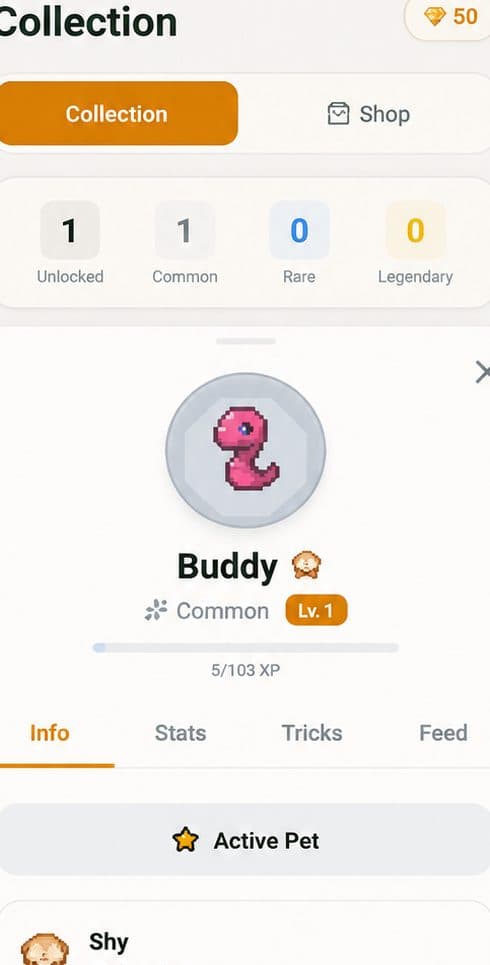
Here's the honest version: Nurrow's pet is not body doubling, and it's not a substitute for it. Body doubling means working alongside another person, whether that's a friend, a coworker, or someone matched to you through a service like Focusmate. A pet on your screen is not a person. It's not watching your output, it's not going to notice if you open eleven new tabs, and it doesn't carry the same social weight that another human being's presence does.
What it does offer is something lighter and always available: a visible companion that's there for the length of your focus session, growing a little each time you finish one. Some people find that having something visibly present while they work gives a faint version of the same "someone or something is here with me" feeling that makes body doubling effective, which can be useful specifically when a real body double isn't an option, like at 2am, or in the gap between two Focusmate sessions. That's worth saying clearly, though: it's a different, complementary thing, not a replacement for working alongside a real person. If body doubling is the tool you're after, Focusmate, a friend, or a coworking space will get you the real thing. Nurrow is a decent fallback for the hours when none of those are around.
Keep Exploring
Frequently Asked Questions
Does body doubling only help people with ADHD?
No. It's a technique that plenty of people find useful, including people with ADHD, but also students cramming for exams, remote workers who miss the ambient presence of an office, writers, and anyone who finds it easier to start a task when someone else is around, even quietly. You don't need any particular diagnosis for it to be worth trying.
What does Focusmate cost?
Focusmate's free plan includes 3 sessions a week and doesn't require a credit card to sign up. Focusmate Plus, which adds unlimited sessions, is around $8 a month when billed yearly. Sessions run 25, 50, or 75 minutes, and you're matched over video with another real person for that block of time.
Does having a virtual pet on screen really count as body doubling?
Honestly, not really. Body doubling is about another person's presence, and a pet on your screen is not a person and isn't paying attention to you the way a human coworking partner is. It can offer a lighter version of the same 'something is here with me' feeling, which some people find useful when a real body double isn't available, but it's a different thing, not a substitute.
Can I body double while doing completely different work than my partner?
Yes, that's normal and often how it works. On Focusmate, in a coworking space, or on a call with a friend, you and your body double usually aren't working on the same task or even the same kind of task. What matters is that you're both visibly working during the same block of time, not that the work matches.
Is body doubling a treatment for anything?
No. It's a practical technique some people find helpful for starting and sticking with tasks, not a documented clinical intervention. If you're dealing with a diagnosis and want to know what's clinically supported for you, that's a conversation for a doctor or therapist, not a website.
Ready to Start Focusing?
Nurrow is free to start, with no account required to begin. Download it today and put your next focus session to work.