Dopamine Detox: What Actually Works
By Aaron Wakely, Nurrow founder · July 19, 2026
"Dopamine detox" is everywhere right now, promising to reset your brain by cutting off stimulation for a day, a week, or longer. Before going any further, it's worth being upfront about what that phrase actually means, because the popular version is mostly marketing language wearing a lab coat.
You Can't Actually Detox a Neurotransmitter
Dopamine is not a toxin, and there's no clinical procedure that removes it from your body or "resets" your dopamine levels the way the term implies. Dopamine is a normal, necessary chemical your brain uses constantly, for movement, motivation, learning, and mood, among other things. You don't detox from it any more than you detox from having blood pressure. "Dopamine detox," as it's used online, is informal shorthand people picked up from self-help culture, not a medical process, and no major health body treats it as one.
That doesn't mean the idea behind it is nonsense. It means the name is doing more work than the science backs up.
The Real Idea Underneath the Buzzword
Strip away the pseudo-neuroscience and there's a reasonable behavioral idea left over: a lot of us spend most of our free hours on activities engineered to deliver constant, instant feedback, endless scrolling feeds, autoplay video, notification-driven apps, games with a reward every few seconds. Compared to that pace, slower activities like reading a book, going for a walk, or sitting down to do deep work can start to feel boring or even mildly uncomfortable. Not because anything is wrong with you, but because your recent baseline has been set by content designed to be maximally attention-grabbing.
Deliberately stepping back from that high-stimulation input for a while lets slower activities feel tolerable, and eventually enjoyable, again by comparison. That's a real, sensible behavioral adjustment. It just isn't a medical detox, and it isn't going to "rewire your brain chemistry" in the dramatic way some videos claim. Framing it plainly, as a stimulation break rather than a biological cleanse, makes it easier to actually plan and stick to.
A Structure That Actually Holds Up
The most common way people fail at this is by going too big: no phone, no internet, no anything, for a week or a month. That kind of indefinite, total ban usually backfires. It's hard to plan around (work, school, and family all still need you reachable), it's miserable to sustain, and one slip tends to feel like total failure, which makes people quit the whole idea.
A scheduled block works better than an open-ended ban. Pick a defined window, a few hours on a weekend morning, or a single weekday evening, and decide in advance what's off-limits during that window and when it ends. Knowing there's a clear finish line makes the block much easier to start and much easier to repeat next week. Consistency matters more than intensity here: a two-hour block every Sunday will do more for you over a month than one brutal, unsustainable week-long attempt.
What to Actually Do During the Block
The point isn't to sit and stare at the wall. Fill the time with things that are genuinely restorative even though they're low stimulation: reading, journaling, cooking a real meal, going for a walk without headphones, stretching, tidying a room, or working through a task you've been avoiding. The first twenty or thirty minutes might feel a little flat or restless, that's normal and usually fades. What you're aiming for is boring-but-restorative, not boring-but-empty.
Using Nurrow to Structure a Block Without Going Cold Turkey
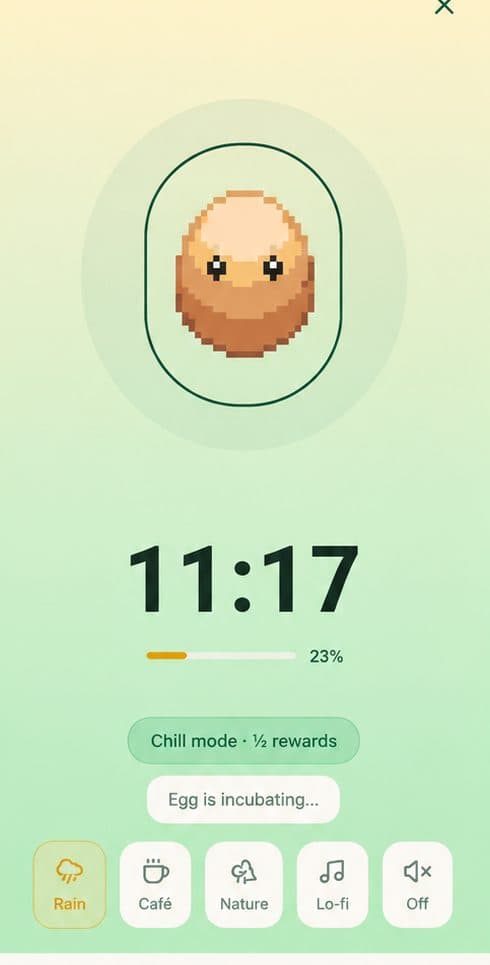
You don't need to delete every app or leave your phone in another state to run a block like this. Nurrow gives you a way to set a defined, scheduled low-stimulation window without the all-or-nothing drama. Its website blocklist can shut off the specific feeds and apps that do most of the damage, the scrolling apps, the autoplay video sites, while leaving the rest of your phone alone. Pair that with Deep Work mode and you get a session with a clear start and end time, so the block isn't vague or indefinite, it's just the next hour or two.
Because the block is scheduled and time-boxed rather than an open-ended commitment, it's much easier to actually follow through on, and much easier to repeat the next time you want a quieter stretch of the day. You finish a session, get your normal access back, and decide fresh next time whether you want another one.
Where This Advice Ends
Everything above is general self-help information about managing everyday stimulation habits. It isn't a treatment for anxiety, depression, ADHD, or any other diagnosed condition, and reducing screen time isn't a substitute for professional care. If you suspect you're dealing with a real underlying behavioral or mental health issue, the right next step is a doctor or licensed therapist, not a phone-blocking app or a self-help article. A scheduled, low-stimulation block can be a useful habit alongside that kind of support, but it was never meant to replace it.
Keep Exploring
Frequently Asked Questions
Is a dopamine detox scientifically proven?
The term itself isn't a recognized clinical procedure, and you can't actually detox a neurotransmitter out of your body. What does have real behavioral support is the underlying idea: cutting back on high-stimulation, instant-feedback activities for a while so that slower, quieter activities feel engaging again by comparison. Think of "dopamine detox" as a catchy nickname for that behavior change, not a documented medical process.
How long should a low-stimulation block last?
A few hours to a single day tends to work better than an open-ended, indefinite ban. Short, scheduled blocks are easier to plan around, easier to actually finish, and easier to repeat. Long, vague commitments to "quit dopamine" for weeks at a time usually collapse within a day or two because they're not built around a real schedule.
Do I need to quit my phone or delete my apps entirely?
No. Deleting every app and going cold turkey is dramatic, hard to sustain, and not necessary for the underlying goal. It's usually more effective to block specific sites and apps for a defined window of time, then get your phone back once the block ends. That keeps the habit repeatable instead of turning it into an all-or-nothing event you dread.
What should I actually do during a low-stimulation block?
Pick activities that are calm but not empty: reading, a walk without headphones, journaling, cooking, stretching, or a focused work session on something you've been putting off. The goal isn't to sit and stare at a wall. It's to spend a stretch of time away from autoplay feeds and notification-driven apps so your baseline resets a little.
Can this help with ADHD or a real focus problem?
Reducing high-stimulation input can make focused work feel more approachable for a lot of people, but it isn't a treatment for ADHD or any diagnosed condition. If you suspect a real underlying issue with attention, mood, or impulse control, a doctor or therapist is the right resource. This article is general self-help information, not medical advice.
Ready to Start Focusing?
Nurrow is free to start, with no account required to begin. Download it today and put your next focus session to work.